
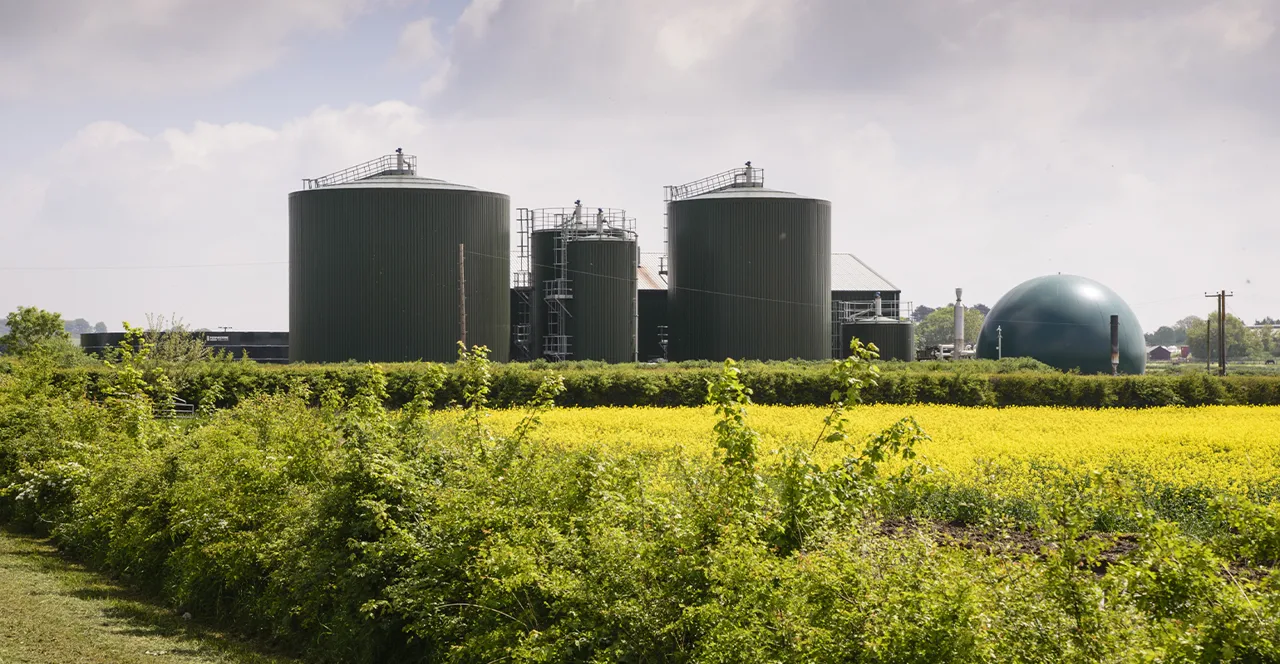
I’ve flown across the country, driven two hours into the middle of nowhere, and passed more farms than I could ever count just to stand next to a giant tank of manure, and honestly, I couldn’t have been happier. To most people, that probably sounds strange. To me, it feels like standing at the center of one of the most practical and overlooked climate solutions we have.
My fascination with projects like these started long before my career. Back in high school, one of my teachers ran her family’s vehicles on biodiesel they produced themselves. She started a creative inquiry class focused on biodiesel and other sustainable fuels, and it completely changed the way I looked at waste. Since then, I’ve been drawn to technologies that create circular economies by turning discarded materials into valuable resources.
At first glance, this probably doesn't sound like the most glamorous corner of engineering. When people hear "sustainable technology," they usually picture hydrogen, electric vehicles, or sustainable aviation fuel, not manure lagoons, food scraps, or wastewater sludge. Yet these less glamorous systems are some of the most practical and impactful climate technologies operating today and have become the foundation of the work I enjoy most.
What makes them so compelling is that they aren't built around futuristic breakthroughs. They're built around biological processes that have existed for millions of years. As engineers, our role isn't always to invent something entirely new. Often, it's recognizing what nature already does remarkably well, then designing systems that allow those processes to operate safely, reliably, and at industrial scale.
Circular Economies
A circular system or economy starts with a simple shift in perspective: waste isn't the end of a process, it's the beginning of another. Materials that would traditionally be disposed of become valuable inputs for a new system. Food scraps, manure, wastewater sludge, and agricultural byproducts all stop being liabilities and start becoming resources.
You can already see this philosophy at work across today's waste-to-value industries. Anaerobic digesters convert organic waste into biogas and renewable natural gas (RNG). Insects can be produced at mass scale to transform food waste into high-value protein and fertilizer. Composting operations return nutrients to the soil, while landfill gas systems capture methane that would otherwise be released into the atmosphere and convert it into usable energy.
The waste itself doesn't disappear, it simply changes jobs. Instead of asking, "How do we get rid of this?" circular systems ask a much more interesting question: "What does this become next?" That subtle shift changes the entire way we design industrial systems.
It's Not Rocket Science, It's Nature
One of the things I love most about anaerobic digestion is that humans didn't invent it. Microorganisms have been breaking down organic matter long before we existed. The same biological process taking place inside a digester is happening naturally in wetlands, landfills, and even inside a cow's stomach. We've simply built the infrastructure to control it and capture the products.
In many ways, a digester is less about creating a new process than creating the ideal environment for an existing one. The microbes already know exactly what to do. They don't need engineers to teach them how to produce methane and nutrients from organic material, they've been doing it for millions of years. Our contribution is providing the right conditions, optimizing performance, and designing systems that allow those natural processes to operate consistently at commercial scale.
That's why I often say waste isn't really waste at all. It's simply a resource that's in the wrong place, at the wrong time, without the right biology nearby. A digester doesn't create value out of nothing, it connects feedstock with the biology that's always known how to unlock it.
The Engineering Part Nobody Sees
While the biology often gets the attention, the engineering behind these facilities is what makes them successful. The instrumentation, controls, and process design used in an anaerobic digestion facility aren't all that different from what you'd find in a refinery, pulp mill, or chemical plant. Flow rates, pressure, temperature control, retention time, automation, safety systems, and reliability are all familiar engineering challenges.
In many respects, traditional industries have already solved many of the problems sustainable technologies face today. Decades of experience in process engineering, equipment design, and large-scale operations provide an incredible foundation. Rather than reinventing industrial engineering from scratch, the opportunity is to apply those proven principles to biology-based systems.
That realization is what hooked me. The first time I walked through an operating digester facility, it didn't feel like an entirely new discipline. It felt like industrial process engineering directed toward a different outcome. The engineering rigor was exactly the same, the feedstocks had simply changed.
Stop Waiting for the Future
Climate technology is often discussed as though every meaningful solution is still years away, waiting on the next scientific breakthrough. But many of the technologies with the greatest potential are already operating today. Anaerobic digestion, insect protein production, composting, and other waste-to-value systems are proven, commercially viable, and generating real environmental and economic value right now.
The biggest challenges aren't scientific anymore, they're practical. Financing projects, securing permits, selecting sites, completing engineering, and constructing facilities are now the primary bottlenecks. These are deployment challenges, not technology challenges.
Every day we delay implementing proven solutions is another day valuable resources are lost and emissions continue unnecessarily. The infrastructure largely exists. The engineering exists. The biology certainly exists. What we need now is the willingness and capability to build.
There's something refreshing about that reality. While emerging technologies like fusion, advanced carbon capture, and next-generation batteries continue to develop, many waste-to-value technologies are already delivering results today. The future of sustainable infrastructure isn't always waiting to be invented.
That's exactly where Isomer fits in. We bring the engineering rigor developed across decades of traditional industrial projects, the same principles used to design refineries, pulp mills, and process facilities, and apply them to new technologies that deserve the same level of technical excellence. We believe meaningful engineering isn't defined by how glamorous a project looks or how large its capital cost is. It's defined by solving real problems and helping proven technologies scale.
There are countless developers working on practical, commercially viable waste-to-value projects that don't make headlines but have the potential to make a significant impact. They don't just need investment, they need experienced engineering partners who understand how to take proven concepts and turn them into reliable, operating facilities that change the world today.


